01Clutch Repair in Huntsville: Same-Day Diagnostics, Honest Guidance
A clutch rarely fails without warning, but by the time it's slipping on the on-ramp to Memorial Parkway or grinding into first gear at a stoplight in South Huntsville, most drivers want an answer the same day — not a callback next week. Manual transmission vehicles are less common on the road than they used to be, which means clutch trouble is often misread as a bigger transmission problem, or ignored until the vehicle won't move under load at all. That distinction matters most when the difference between a clutch replacement and a full transmission rebuild is misread early on, turning a smaller repair into a much larger one. Whether you're driving a stick-shift daily driver, a work truck routed through Madison, AL, or a project car you only take out on weekends, the clutch assembly wears the same way everyone else's does: through heat, friction, and the mechanical stress of engagement.
This page is built specifically around clutch repair and manual transmission clutch replacement in Huntsville — not general transmission service. Below you'll find the real mechanical factors that determine whether a repair is a straightforward clutch kit swap or something more involved, what a proper diagnostic actually inspects, and how a written estimate and warranty terms should be presented to you before a wrench ever touches your transmission. Nothing here is a guessed price list or an invented review count; it's the questions worth asking before you approve a repair.
02Clutch Repair Symptoms Worth Diagnosing Now
03What Actually Drives Clutch Repair Cost in Huntsville?
Clutch repair pricing is one of the most inconsistent quotes in auto repair, and it isn't because shops are guessing — it's because "clutch repair" covers a wide range of actual work depending on the vehicle and what's found once the transmission comes down. A fair estimate has to account for the vehicle's drivetrain layout, which parts are genuinely worn versus which are simply old, and how much labor it takes to physically reach the clutch assembly.
Drivetrain layout changes the labor time
On many front-wheel-drive compacts and sedans common around Huntsville, the transmission sits transversely and can sometimes be accessed with the engine partially supported in place. On rear-wheel-drive trucks and larger vehicles, however, the transmission typically has to be dropped fully, and on 4WD trucks the transfer case may need to come off first. That difference alone can shift labor time significantly, which is why a phone-quoted flat price for "clutch replacement" without knowing the vehicle is rarely accurate.
What's actually inside a clutch job
A complete clutch replacement typically involves several components replaced together rather than one part swapped in isolation:
- The clutch disc and pressure plate, usually sold and installed as a matched kit
- The throw-out (release) bearing, replaced proactively since the transmission is already out
- The pilot bearing or bushing, a small but critical wear item at the back of the crankshaft
- The flywheel, which may be resurfaced if it's within spec or replaced if it's warped or heat-scored
- On hydraulic-clutch vehicles, the slave and sometimes master cylinder, if either is leaking or feels spongy
Choosing between OEM-spec and quality aftermarket clutch kits also affects the estimate, and that choice should be explained to you — including why one is recommended over the other for your specific vehicle and driving use — rather than decided for you silently.
When symptoms are misread as bigger transmission problems
Because manual transmissions are less common than they once were, a slipping or worn clutch is sometimes assumed to be an internal transmission failure, which is a very different and often more involved repair path. A proper diagnostic distinguishes between the two before any parts are ordered, since replacing a clutch when the real issue is a transmission synchro — or the reverse — wastes both time and money.
It's also worth separating same-day diagnosis from same-day repair. A same-day diagnostic can typically confirm whether the issue is clutch-related and produce a written estimate the same day symptoms are reported. The repair itself, especially on vehicles requiring transmission removal, may take longer depending on parts availability for your specific make and model, and that timeline should be part of the conversation up front rather than a surprise after you've already committed.
What a transparent estimate should include
Before any repair is approved, you should receive an itemized, written estimate generated after a physical inspection and test drive — not a number quoted sight-unseen over the phone. That estimate should separate parts from labor, note whether the flywheel needs resurfacing or replacement, and disclose the warranty terms on both parts and labor in writing. If a shop can't explain in plain language why a specific part is being replaced, that's worth asking about before you sign anything.
04Our Same-Day Clutch Diagnostic Process
We ask what you're feeling and hearing — slipping under load, a spongy pedal, grinding, or a burning smell — to decide whether your vehicle needs today's diagnostic slot or can be scheduled for later in the week.
A short test drive confirms slippage, chatter, or engagement point issues, followed by a check of pedal feel and hydraulic lines, plus a look for fluid contamination or leaks that could point to a related transmission issue instead.
If the diagnostic points to the clutch assembly itself, the transmission is accessed to directly inspect the disc, pressure plate, flywheel surface, and release bearing — confirming exactly which components are worn versus which are simply due for proactive replacement while the transmission is already open.
You receive a parts-and-labor breakdown before any repair proceeds, including whether the flywheel needs resurfacing or replacement, and we discuss OEM versus aftermarket part options so you can decide based on your budget and how long you plan to keep the vehicle.
Once approved, the clutch system is reinstalled, hydraulic lines bled if applicable, and the vehicle road-tested to confirm normal engagement, with warranty coverage reviewed directly so there's no ambiguity about what's included if a related issue comes up later.
05Clutch Repair Questions Huntsville Drivers Ask
A slipping clutch generally gets worse, not better, and driving on it under load — merging onto Memorial Parkway, towing, or sitting in stop-and-go traffic — accelerates wear on the pressure plate and flywheel surface. It's not always an immediate breakdown risk, but delaying inspection usually turns a clutch-only repair into a clutch-plus-flywheel repair.
They're related but distinct. The clutch engages and disengages power from the engine to the transmission; the transmission itself handles gear selection. Symptoms like slipping, chatter, or a spongy pedal usually point to the clutch assembly, while grinding between specific gears or fluid leaks point more toward the transmission. A proper inspection distinguishes between the two before any parts are ordered.
No. Clutch replacement addresses the clutch disc, pressure plate, and related wear components between the engine and transmission. A transmission rebuild is a separate repair addressing internal gear, synchro, or bearing failure inside the transmission itself. Removing the transmission to access the clutch doesn't mean the transmission is being rebuilt.
Warranty terms depend on the specific parts installed — OEM versus aftermarket kits often carry different coverage — and should be provided to you in writing at the time of the estimate, not described verbally after the fact. Ask specifically what's covered on parts versus labor before approving the repair.
Frequent stop-and-go driving, hill starts, and heavy commuting on corridors like Memorial Parkway or through South Huntsville do increase clutch engagement cycles compared with steady highway driving, which can shorten clutch life over time. Driving style — riding the clutch or slipping it at low speed — has an even bigger effect than traffic alone.
Sometimes. If the problem is isolated to a hydraulic slave or master cylinder rather than the clutch disc and pressure plate themselves, that can be a smaller repair. That's exactly why a physical inspection matters before assuming a full clutch kit is needed.
06Every Estimate In Writing, Before Any Work Begins
Whether you're calling from South Huntsville, Madison, AL, or anywhere along the Memorial Parkway corridor, you should receive a written, itemized estimate and clear warranty terms before a transmission ever comes down — not a verbal number and a promise.
07What Manual Transmission Clutch Replacement Actually Involves
Once a diagnostic confirms the clutch assembly itself is failing, the repair follows a fairly consistent sequence — though the labor time and access difficulty vary by vehicle. Understanding the steps helps explain why clutch replacement is priced as a bundled job rather than a single-part swap.
Getting to the clutch
On most vehicles, the transmission has to be safely supported and separated from the engine to expose the clutch assembly, which usually means disconnecting the driveline, shift linkage, and any hydraulic or electrical connections first. On four-wheel-drive trucks, the transfer case may need to be removed before the transmission itself can come down, adding to the labor involved.
Inspecting and replacing the wear components
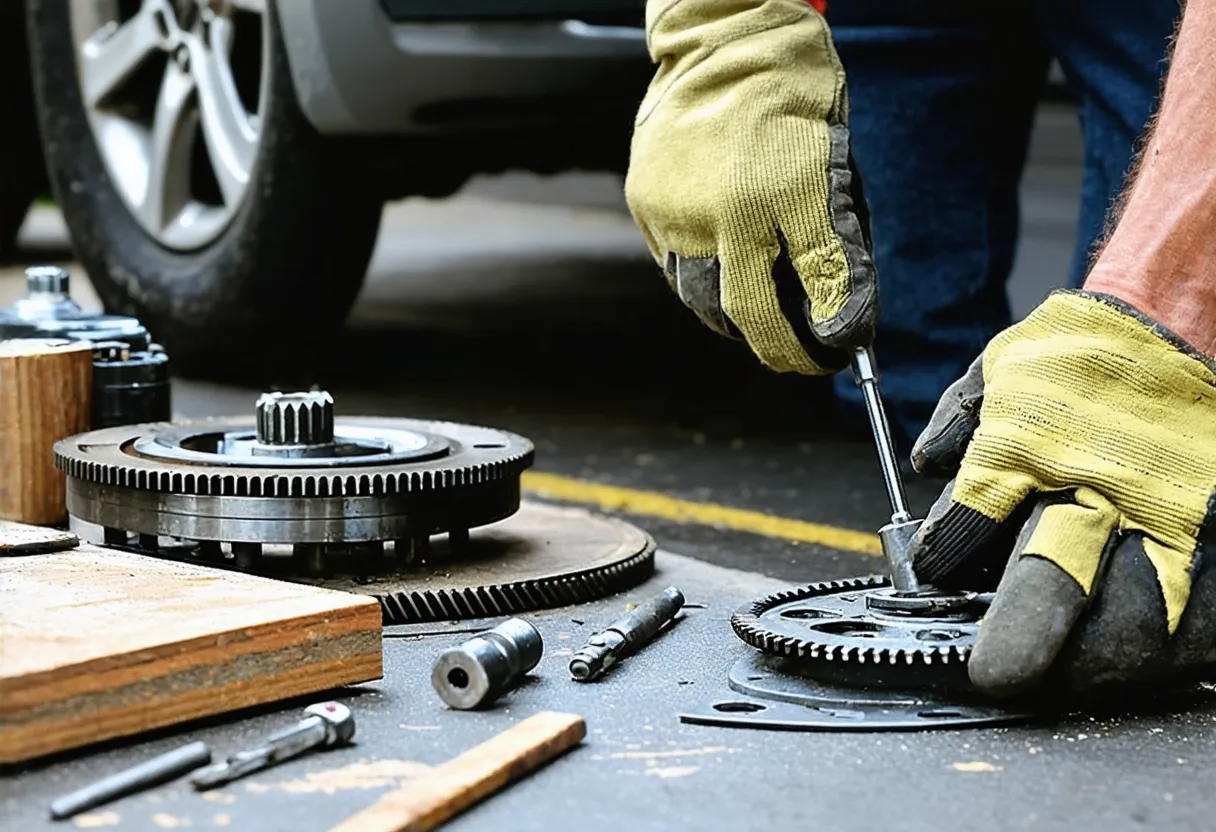
With the transmission out, the flywheel surface is inspected for heat spotting, warping, or scoring. A flywheel within spec can sometimes be resurfaced; one that's damaged needs replacement. The clutch disc and pressure plate are replaced as a matched kit rather than individually, since mismatched wear between old and new components leads to premature failure. The throw-out (release) bearing and pilot bearing or bushing are typically replaced at the same time — not because they've necessarily failed yet, but because the labor to access them again later would cost more than replacing them proactively now.
One shortcut worth watching for: reusing a worn flywheel without resurfacing or replacement to save time. A flywheel that's warped or heat-scored will wear a new clutch disc unevenly and can bring back the same slipping or chatter symptoms within a short mileage window, which is why the flywheel's condition should always be explained to you, whether it needs work or not.
Hydraulic system and reassembly
On hydraulically actuated clutches, the slave cylinder — and sometimes the master cylinder — is inspected for leaks or a spongy feel and replaced if needed, since a failing hydraulic component can mimic clutch wear symptoms even with a healthy clutch disc. Once everything is reinstalled and torqued to specification, the hydraulic system is bled to remove air, and the vehicle is road-tested to confirm the engagement point feels normal and there's no slipping, chatter, or noise under load before it's returned to you.
How long a clutch lasts before needing this kind of repair depends heavily on driving habits and use case — a work truck towing trailers through Madison, AL wears differently than a commuter car mostly driven on the Parkway — which is another reason a blanket mileage interval for clutch replacement isn't reliable advice. This is also why "just replace the clutch" and "diagnose the clutch" can turn into different conversations once the transmission is actually open — a shop that explains what it finds, rather than adding line items without context, is doing the job the way it should be done.
08Why Huntsville Drivers Choose Local Same-Day Clutch Diagnostics
Request Your Quote
Free, itemized, and no pressure to move forward.
Get An Itemized Quote
See exactly what a repair would cost before you decide anything.